Honesty: the virtue we admire and praise, but are we living accordingly? And, Is honesty the same as truth?
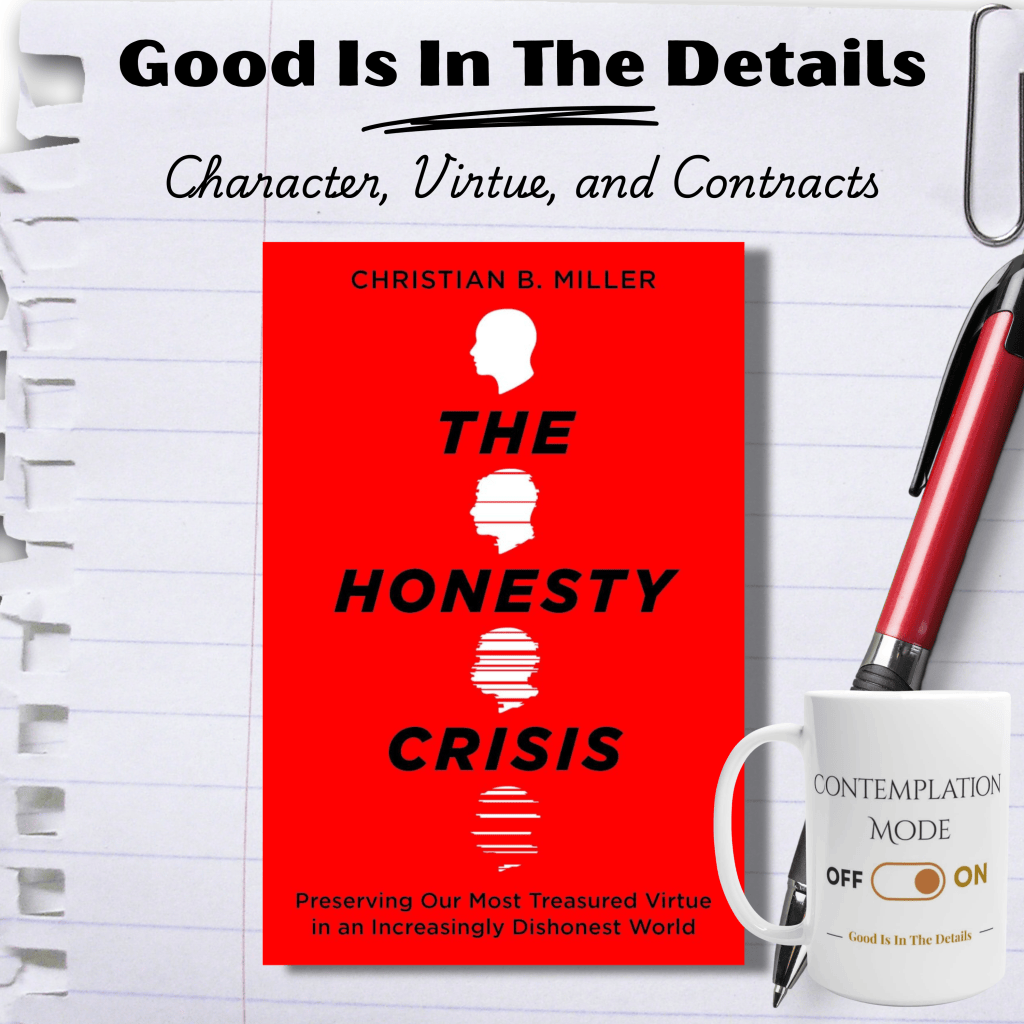
Philosopher and author of The Honesty Crisis, Christian Miller, offers a fresh look at this Aristotelian virtue with respect to our current cultural climate. The “white lie” one might tell to smooth a wrinkle in delicate conversation has not, generally speaking, been subject to profound shaming à la Game of Thrones. But, perhaps, the “white lie” has shape-shifted from the careful response one might give in an awkward conversation to the new reality of online life.
How are we commenting, “liking,” or presenting on Instagram, for instance?
Does engaging in other’s posts while in a committed relationship potentially breach the realm of honesty? Not absolutely, but potentially? How involved should one’s significant other be in social media posting?
If all students are using AI for their work, then is it dishonest to follow suit?
When politicians lie, should we just shrug?
How much should one disclose for a job interview?
For Aristotle, one is virtuous when acting in the right way, at the right time, for the right reason, according to one’s ability and situation. In addition, the person must do so with the right disposition. This means, when it comes to honesty, there isn’t a blanket standard we can point to, a strict checklist, because the expression of it depends on several factors being in alignment. Much like a skilled comedian who has mastered wit, timing, and the ability to read a room, the honest person must cultivate awareness in order to be honest.
An interesting point by Christian is that honesty and truth are not necessarily interchangeable. One could say something honestly, but the content of what’s said could be untrue. Let us examine this in reverse: one could say something true like “I think your outfit is ugly,” but because there’s no reason to say this other than to be hurtful or rude, it doesn’t qualify as honest. The disposition and intention matter.
Does being honest mean one risks “success”? After all, aren’t we encouraged to “fake it till you make it”?
When I taught Engineering Ethics, I often found this idea of being virtuous, good, or honest as an obstacle to success and wealth troubling. Of course, people can and have achieved wealth through unethical means, but it doesn’t follow that it’s the only path to wealth. In fact, several of the case studies of engineering disasters we covered in that course, like The Challenger Space Shuttle Disaster, the Ford Pinto, and the Tylenol recall, demonstrate that unethical actions were also catastrophic business decisions. Honesty builds. Honesty grows relationships, confidence, and credibility.
Miller’s work prompted me to think of questions for one to consider:
When being dishonest, why?
What do I want to hide from the other(s)?
Am I afraid? Of what?
Am I happy doing this?
What do I want to achieve?
If I were honest, how do I believe that would alter the outcome?
These questions move the discussion away from rules and toward character.
I suspect, being dishonest is an attempt for power, but ironically, it’s the clearest signal that one is without power. And even if no person ever discovers the dishonesty, one will have to live with the knowledge of having manipulated an other into a false idea. This could be quite lonely and self-defeating.
Honesty, in contrast, is an act of self-care and self-respect. It’s a commitment to one’s self to be whole, to be a good partner, an empathetic friend, and to thrive in work and business.


Leave a Reply