
The infamous Stanford Prison Experiment I find interesting, but not for any of the reasons regarding its purpose or the dubious conclusions. Despite it being a staple on my Philosophy syllabi over the years, there isn’t much routine or repetition in the classroom discussions for it. That in and of itself is interesting! How can the same assigned material, a BBC documentary on the experiment, yield different conversations semester after semester? This is not the case for studying Aquinas or Descartes or Hume.
Moreover, why would an experiment that’s scientifically and ethically problematic be something to study? By scientific I mean that the method, the sample size, and the Professor, Dr. Zimbardo, playing a dual role in the experiment all render the conclusions faulty at best. By ethical, I mean the participants’ lack of informed consent and a brazen violation of the Kantian principle to not use people as a means only, both of which made the experiment impossible to replicate. (Although I suspect reality TV comes awfully close.)
In all the messiness, I’ve landed on what I consider to be an important truth that deserves attention: in his efforts to test what happens when you put good people in an evil place, he had to actually create one. The details of this creation are what stand out to me. Zimbardo’s experiment serves as a blueprint for what makes evil evil.
And if one does not care for the implications around the term evil, I think it’s fair to consider other terms such as very bad, wrong, and inhumane.
If we focus on the errors of the experiment, I think we’re forfeiting a much larger opportunity to examine how the setup itself reveals what constitutes evil, cruelty, and even torture. Thinking carefully about this ushers in meaningful ways to reflect on our own behavior toward others, whether privately or through institutions.
When we look to the present, current events, and breaking news, eerie parallels emerge. And because the world is not the same from semester to semester, a new way to examine Zimbardo’s idea of evil sparks different discussions.
First, a few details of the elements in play to make a place “evil.”
- Absence of names: Participants are addressed according to their numbers (“prisoners”) or “Correctional Officer” (“guards”).
- Absence of light and with it a deprivation of sense of time.
- Sunglasses worn by “guards” which prevent eye contact.
- Random, unnecessary tasks imposed on the “prisoners.”
- Sleep deprivation.
How do these things translate to evil?
I propose to reverse engineer the human being as our starting point. What makes us human? What makes us distinct from other forms of life? Our capacities for reason, empathy, language, creativity, along with our social bonds are a few of the mental features. Physically, we require sleep, nutrition, and we are made for long-distance movement. Oh, yes, and opposable thumbs…for texting.
The design of the Stanford Prison Experiment intentionally diminished these human qualities. One cannot reason well without sleep. Tasks with no point disrupt the brain’s need for purpose and solution. The lack of names compromise one’s identity and sense of self in addition to encouraging participants to see other humans as objects in the room.
Evil, then, according to this setup, entails an intentional and unnecessary imposition on a human to deprive the human of the very things that make the human human.
It is one thing to memorize the inner workings of the experiment for an exam, and quite another to map this idea of evil onto the news of the week, as we just did for my Introduction to Philosophy class.
The news: Jane Doe and the Cornell 7
Every aspect of this news are awful. Just awful:The alleged incident itself, the lack of legal response and responsibility, the university’s solution, and the deluge of victim blaming now circulating. I’ll set most of that aside to focus on one part worth highlighting: the text/Snapchat message sent to the 50 members of the fraternity: “free p***y upstairs.” Note the similarities to the conditions of the Stanford Prison Experiment.
Jane Doe was described as a body part. No name.
Jane Doe’s body part was offered for free. No name + reduced to an object.
Jane Doe’s intoxication. Her reason was incapacitated, and that incapacitation was deliberately reinforced. This means her ability to consent or be self-aware was compromised.
Men who saw the text and remained silent mirrors the “guards” who weren’t violent or degrading but also didn’t have the courage to stop the ones who were.
Men who allegedly assaulted Jane Doe did not view her as human, and in fact, entered the room because she was not described as human but as a body part.
Then there are the commentators who have chosen to publicly shame Jane Doe and suggest she was responsible because of her intoxicated state. Among the most despicable and cringe-inducing takes is Megyn Kelly’s claim that Jane Doe wanted the attention because she’s “beefy” and unattractive; therefore, the alleged crime wasn’t a crime at all because Jane Doe was seizing on a sexual opportunity that she wouldn’t otherwise easily find.
Let’s employ our critical thinking skills for a moment and tackle the logical problems:
Being intoxicated is not permission for others to touch you. Being at a fraternity party is not giving others permission to touch you. In the kink community, for example, most people at events attend with the intention of playful sexual interaction and will dress in skimpy costumes, lingerie, or nothing at all. Yet, organizers are extremely clear about consent and will swiftly remove any attendee who makes a move without it.
So how is consent clear in an environment explicitly catering to sexual and physical pleasure, filled with attendees wearing next to nothing? Yet, in contrast, this is deemed ambiguous and confusing on a university campus?
Jane Doe’s appearance and level of intoxication are not relevant. Jane Doe’s appearance and level of intoxication didn’t cause the men to type a message to all fraternity members. Jane Doe’s appearance and level of intoxication didn’t cause them to accept the invitation. Jane Doe’s appearance and level of intoxication didn’t cause the men to unzip and assault, which went on for hours.
A fallacy of relevance in the premise: Jane Doe’s level of “attractiveness.” Women of all ages and sizes have been sexually assaulted. Thus, the degree to which a victim appears conventionally attractive can’t be a causal factor. The leap from her ‘attractiveness’ to the conclusion that she wanted this, and that it was therefore consensual, bears no evidence behind it. (Non sequitur.) It was a bizarre guess made by Megyn Kelly.
I’m left wondering, how can the material we learn in the classroom translate into being more thoughtful and aware of the way we walk through life now. The Stanford Prison Experiment is over 50 years old. It’s stipulated to be terrible: A hell. And yet one of its most important lessons endures: an evil environment is created, in part, by refusing to use a person’s name, whether by substituting a number, a racial slur, or ‘free p***y.’ When confronted with it via text or “locker room” talk, that refusal to acknowledge a person by name should register as inherently demeaning and a step toward facilitating an evil environment.
Recommended books for learning more about this subject(click on image for purchase):


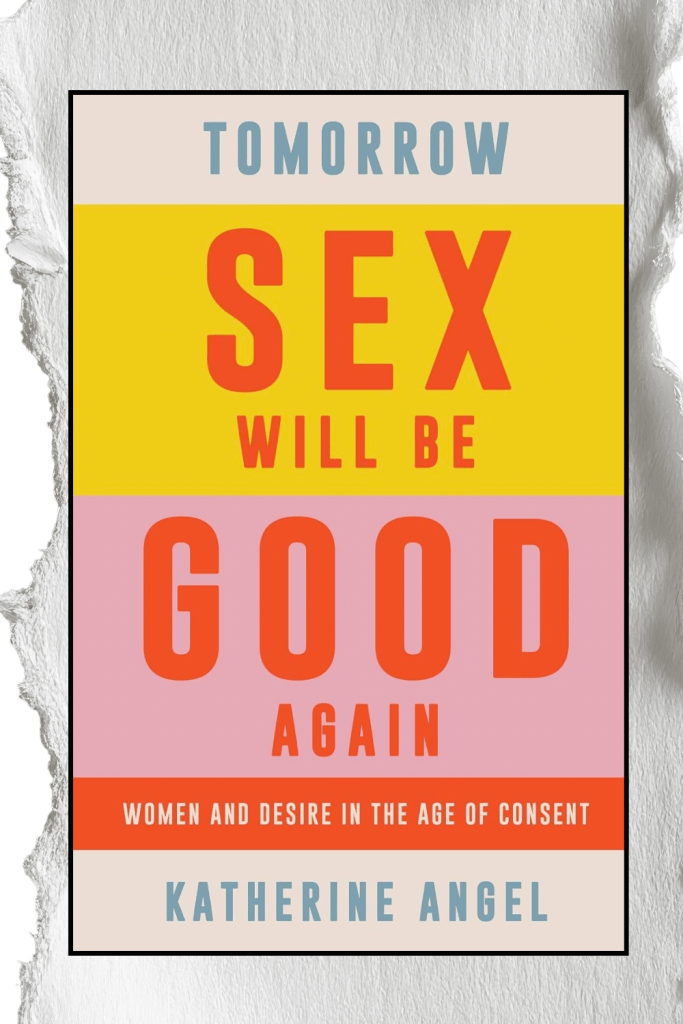
*Book links are with Amazon Affiliate link for Good Is In The Details. Commission earned on qualifying purchases. Thank you for supporting educational content and public philosophy.


Leave a Reply