What does it mean to offend?
Is to be offended a matter of subjective experience? Or are there specific requirements, a threshold of logic, if you will, that must be met for one to indeed rationally claim they are offended?
People often mistake the introduction of “a” (another possibility) for an attack on “the” (their preferred or assumed possibility).
The curious cases of Paul Henri Thiry, Baron d’Holbach, Bad Bunny, and a story about penguins.
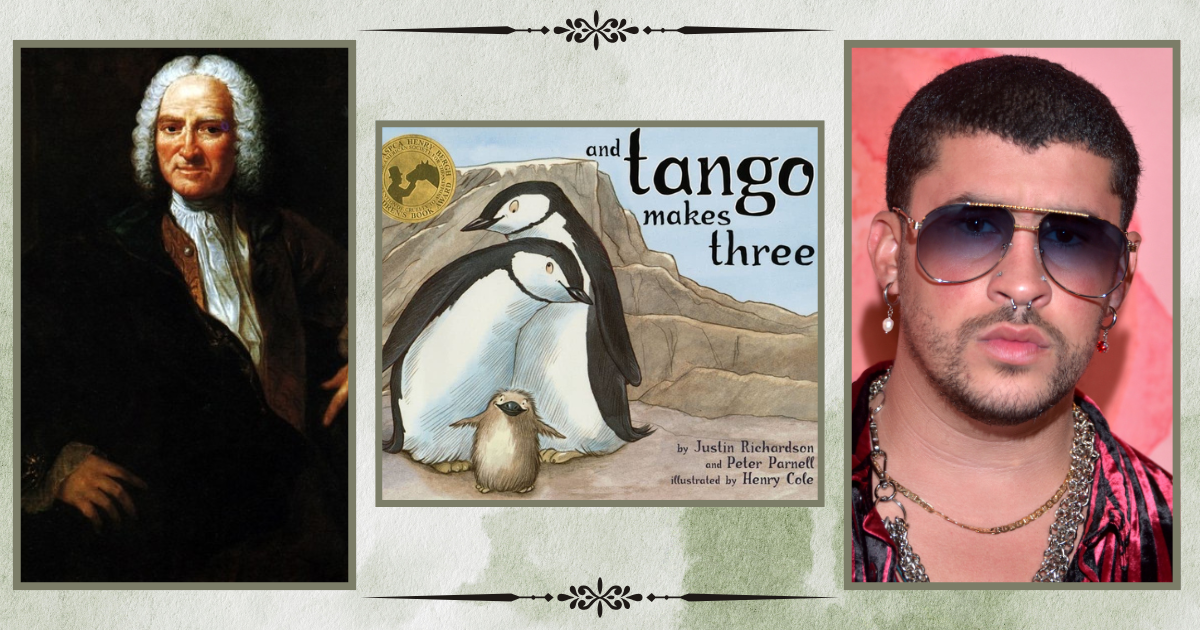
A philosopher, a performer, and a children’s book may sound like the start of an odd joke. Perhaps in another life I could thread a humorous tale involving walking into a bar, but alas, I shall lean into my Philosophical training here to point out an interesting commonality in what they reveal about the nature of offense; and thereby call on an account of what an agreed upon definition of “offend” entails in order to examine if a response to the three appropriately falls under the notion of it.
Consider the following quote from Holbach’s writing on the theory of Determinism:
In whatever manner man is considered, he is connected to universal nature, and submitted to the necessary and immutable laws that she imposes on all the beings she contains, according to their peculiar essences or to the respective properties with which, without consulting them, she endows each particular species.
At the time of Holbach’s writing (1700s) and even today, man is deemed special and above nature rather than part of it. Man has been tasked by God to be in charge of the world as opposed to simply relegated as another being/animal of it. Wouldn’t choice, reason, and free will mean that man exudes his own laws? What do you mean that I am constituted just as all beings in nature?
Consider the following quote from Bad Bunny at the 2026 Half-Time Super Bowl Performance:
God Bless America. Chile, Argentina, Uruguay, Paraguay, Bolivia, Peru, Ecuador, Brazil, Colombia, Venezuela, Guyana, Panama, Costa Rica, Nicaragua, Honduras, El Salvador, Guatemala, Mexico, Cuba, República Dominicana, Jamaica, Haiti, Antilles, United States, Canada,” he said. “And my motherland, mi patria, Puerto Rico. Seguimos aqui (We’re still here).
After the performance, critics complained that Bad Bunny did not represent the United States nor did the performance reflect American values (especially since it was in Spanish…gasp!)
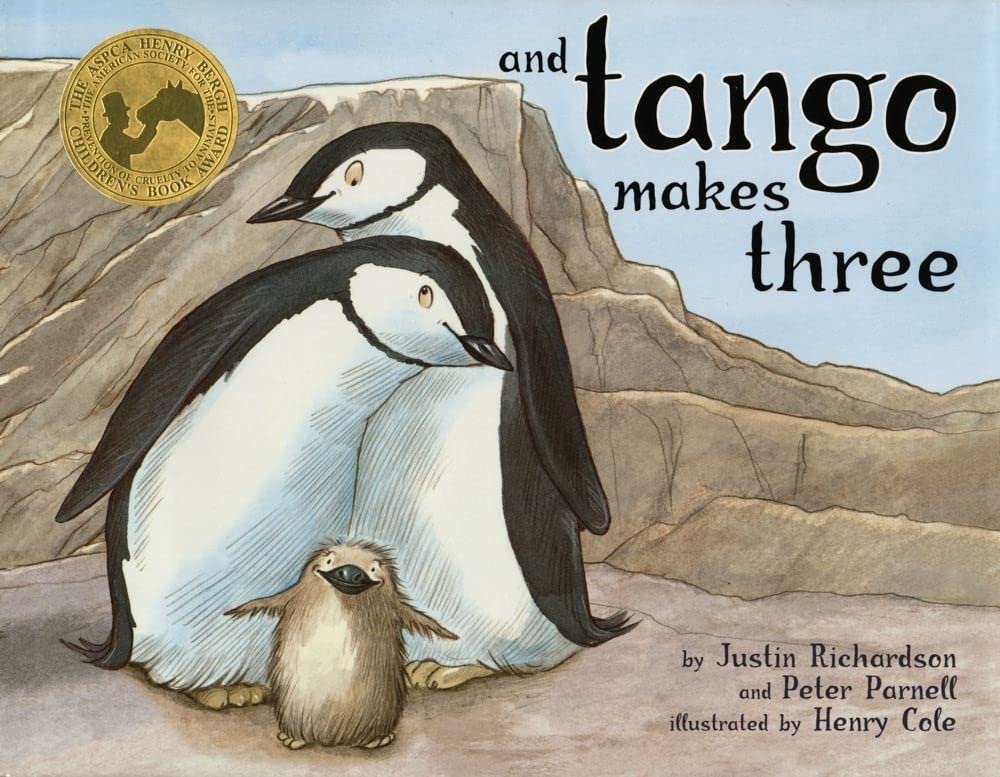
Consider the following children’s book And Tango Makes Three by Justin Richardson and Peter Parnell, which despite its recognition and notable accolades garnering it several book awards like the ASPCA Henry Bergh Book Award and the Bank Street Best Book of the Year, has been pitched into the cascade of banned books lists spearheaded by folks who deem pearl-clutching a valid hobby.
The book imagines a story line based on actual events of two male penguins, inseparable in their activities and affection, being given an egg to nurture in its natural course and then parenting the baby penguin.
Now, to offend, in its most general and recognized definition means to cause hurt, anger, or disrespect. The three examples (Holbach, Bad Bunny, and the children’s book) certainly appear to have offended many people. I write appear here intentionally.
Does the meaning of offend stop at the emotional outcome (hurt, anger, disrespect) or does this outcome possibly point to another thing entirely? In other words, are there other reasons one would experience that outcome? I’ll return to this in a moment.
In each case, much of the backlash rested on the assumption that what was being presented was a new “the,” or that an “a” did not belong within the category at all.
If one can only think in terms of “the,” then when presented with an “a,” fear bubbles into outrage because “a” seems like a new “the.” Singular reigns.
Holbach’s work on Determinism reframed human beings as being a part of nature, a part of the world governed by laws like everything else.
Bad Bunny’s performance demonstrated, in quite a spectacular fashion, that Spanish is a first language for American citizens and that the United States is a country in the Americas.
And Tango Makes Three is a sweet story of a type of family.
Sure, Holbach’s position dethroned the status of the human being from the highest rank of being, one with free will, and thus not akin to nature; however, Holbach’s theory is actually supported by the trajectory of science today. (Dr. Ted Schwartz’s Gray Matters offers an accessible example of this line of thinking.)
Bad Bunny’s first language and his citizenship are not, in fact, contradictory. His existence and performance inherently prove that Spanish is a language spoken in the United States, but some responded with outrage because he revealed that English is a language of the United States and not the language of the United States. Some commentators went so far as to complain that he was making people speak Spanish or that it would take over; however, that only reveals a thinking stuck in a “the” framework. He did not advocate for a singular possible language, merely demonstrated there’s more than one.
Likewise, And Tango Makes Three, based on real male penguins in a real zoo, offers a delightful story of a family and thereby ushers in the idea that there isn’t just one type of family, a “the.” Does the book suggest the penguins are a “the” and that only single-sex couples make the defining feature of family? No. It does not claim that every family looks this way, nor does it argue that one family structure should replace another. But if one adheres to “the” as a principle, then it’s difficult to conceive of an “a” being presented.
Returning to the idea of offense, we might ask: does introducing a instead of the, particularly when that introduction is grounded in fact, constitute an offense?
Would intentionality, motive, lack of reflection or ability to apologize be part of the definition to offend? If so, then we cannot call being offended by the three examples offense proper.
Can the revelation of a fact be an offense? Can one’s narrow concept of “the” be grounds for finding offense?
If being offended is derived from holding onto an idea that isn’t true, or clinging to a belief of one possible way and thereby excluding even the recognition of an “a,” then is it really an offense?
Perhaps it’s indicative of something else entirely. Basic critical thinking skills, taking the time to consider more than one way of being, and dare I say delight in learning of variations to one’s conception of the world, would alleviate this self-inflicted offense.
*As.a parent and lover of books, I do recommend And Tango Makes Three. It’s in the mix of our night time reads.
*Amazon Affiliate link: I earn from qualifying purchases.


Leave a Reply